L'Orebit Platform
The student platform of École Polytechnique's bachelor — accounts, a virtual currency, CVs and forms.
- 182verified accounts
- 375completed coin transactions
- ~500students in the bachelor
- 1developer
What it is
I’m one of eleven students elected to L’Orebit, the student organization of the bachelor at École Polytechnique, and I’m responsible for everything technical. The platform is the home for student life: public information for everyone and a personal space for each student.
What it does
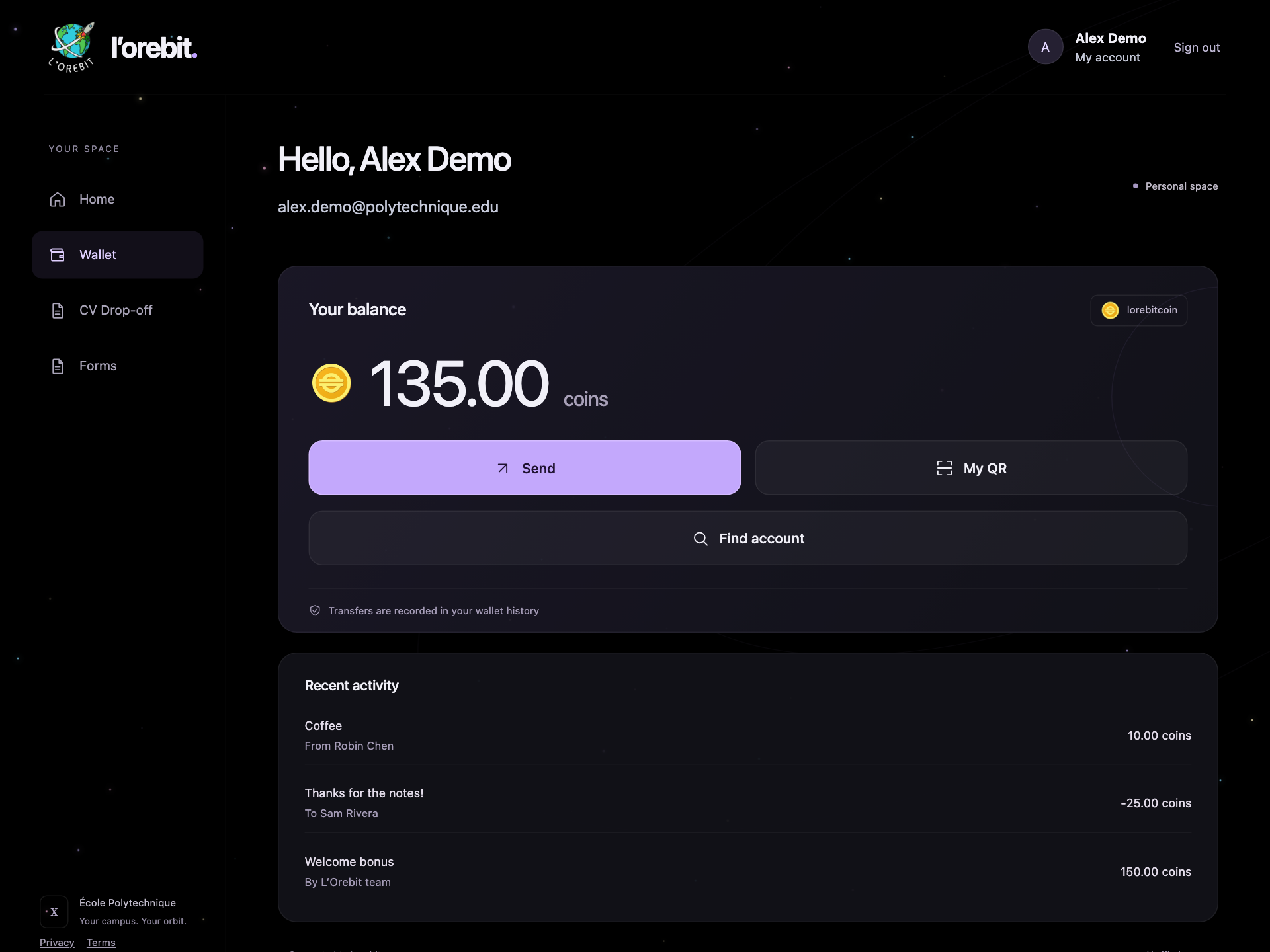
- Verified accounts with school-email verification and revocable, persistent sessions.
- A wallet with student-to-student coin transfers and administrative issuance.
- QR-linked profiles that can be revoked.
- A CV drop-off system that connects students with partner companies (below).
- Forms that can be created quickly when the organization needs information from students.
CV drop-off for partner companies
Students pick their year and major and drop off a one-page PDF, up to 5 MB. Every file is scanned for malware and cleaned of active content before it is accepted, and a replacement never overwrites a good CV unless it passes too. Approved CVs are merged into a single CV book that rebuilds automatically every ten minutes. Nine partner companies open it through a private access link that admins can create and revoke; there is nothing to apply to individually. Admins open and close the drop-off window, write the announcement, manage partners and hide individual CVs from the book.
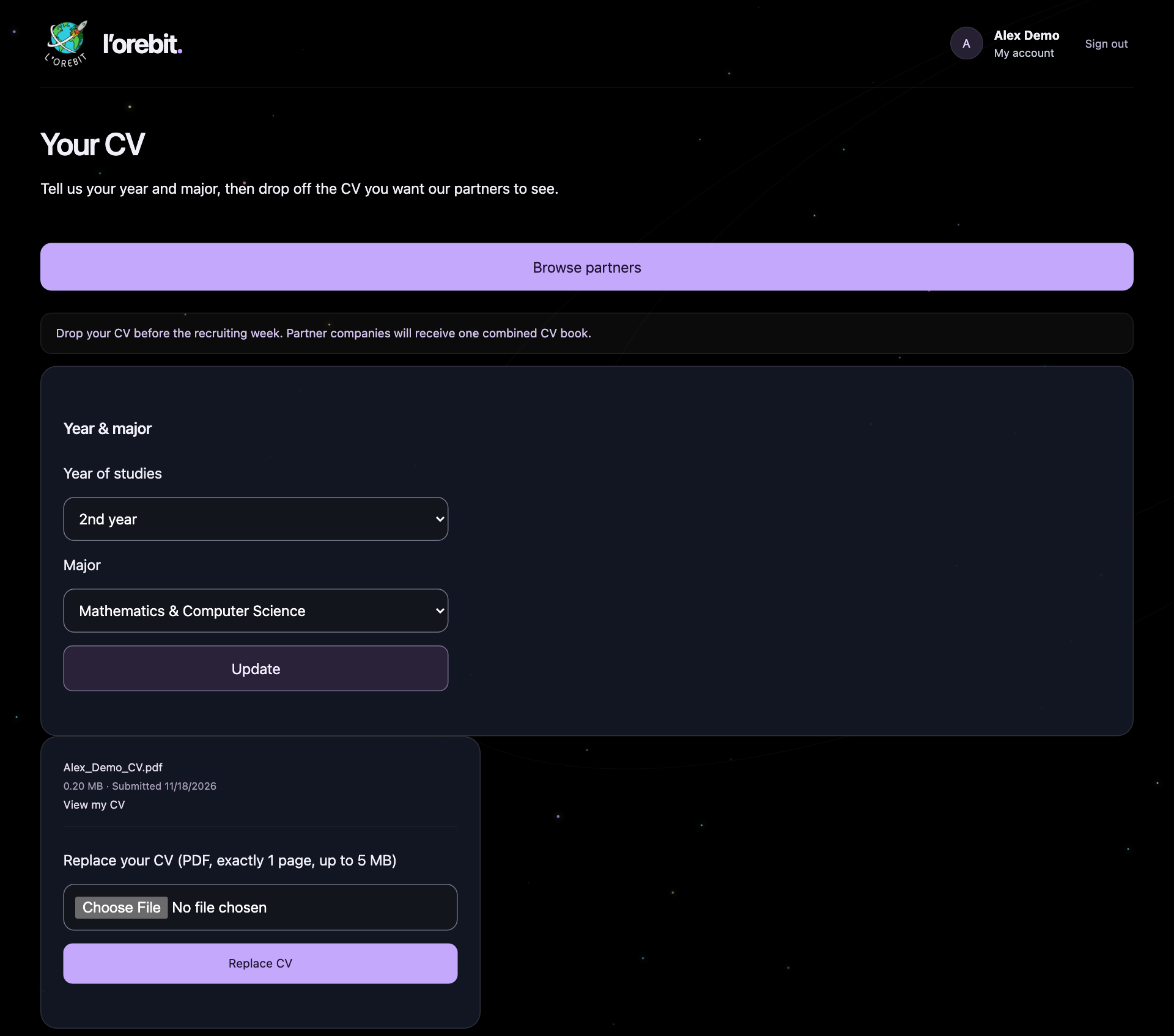
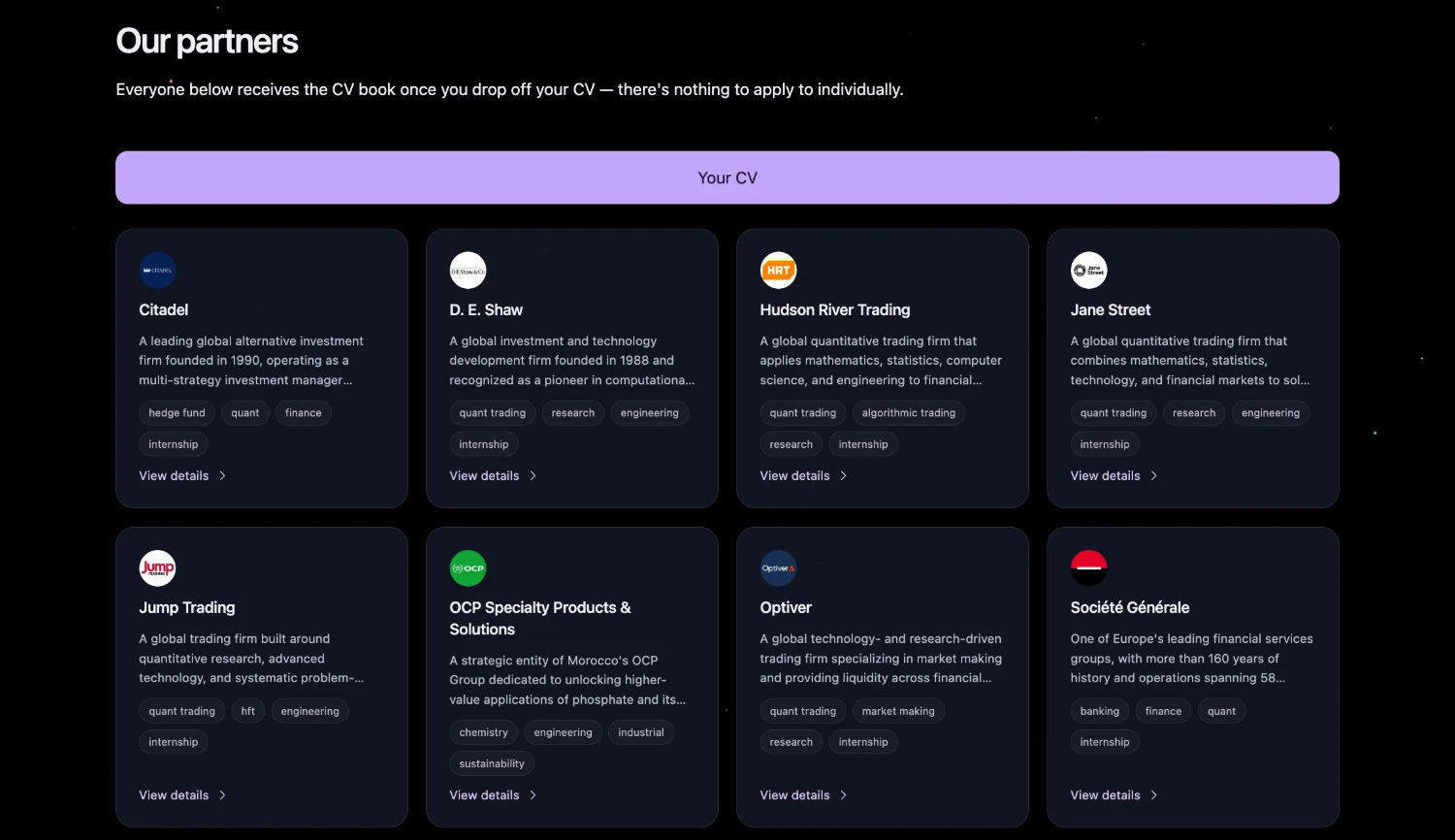
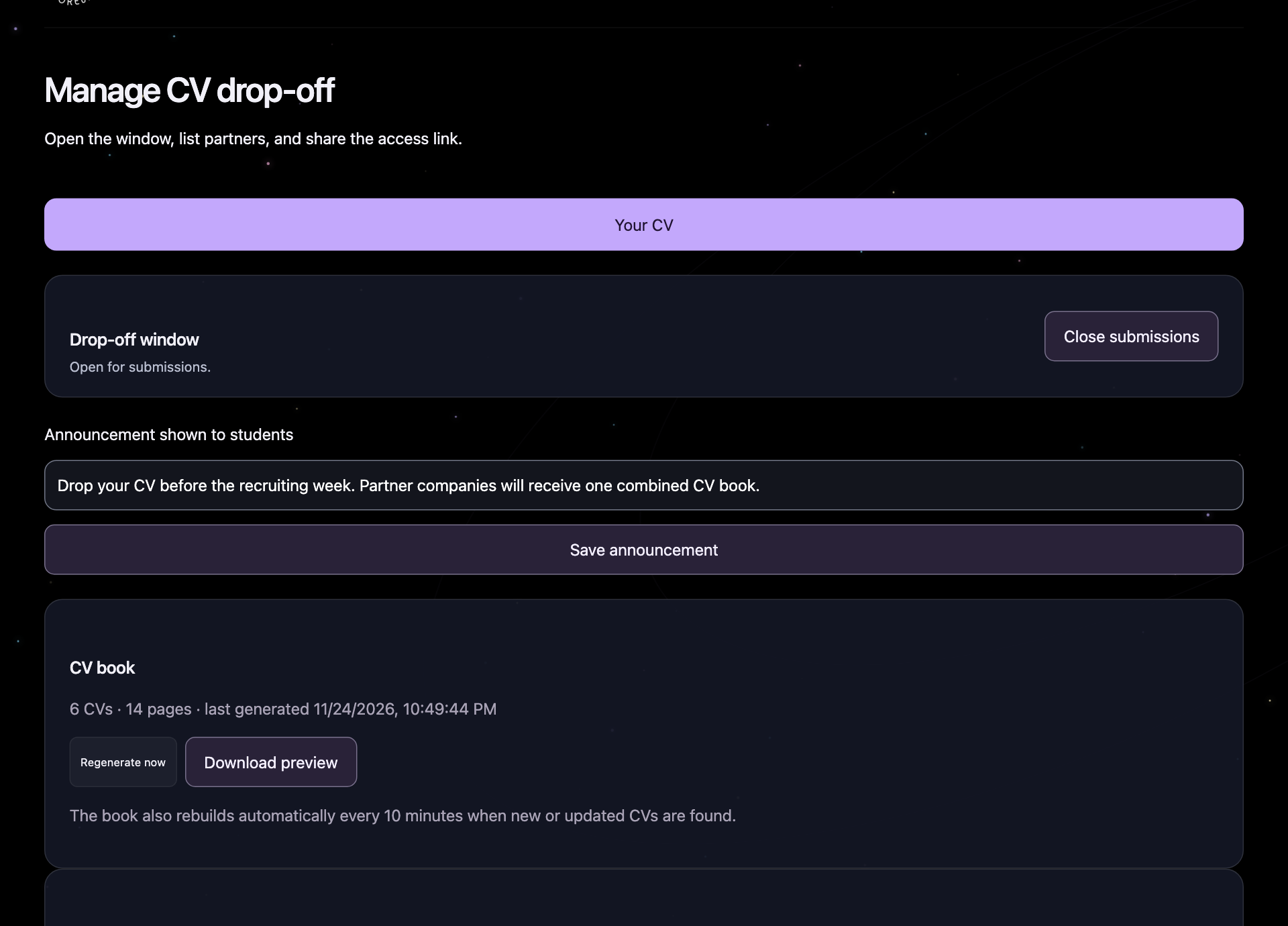
The student and admin screens come from a local build with mock data (fictional students). The partner list is the real one from lorebit.fr.
A hard part: money that can’t be double-spent
Two simultaneous requests must never spend the same coins twice. Transfers run in atomic database transactions with row locking and idempotency keys, a ledger can be reconciled at any time, and concurrency tests try to break it on every change.
How it’s built
React, TypeScript and Vite on the front. Django and Django REST Framework on the back, PostgreSQL for data and Valkey for rate limiting and short-lived shared state. It ships as Docker Compose behind Caddy with automatic HTTPS; GitHub Actions runs backend, frontend, browser and accessibility tests, and releases go out through a separate deployment script.
Beyond the transfer logic, the security work is concrete: backend permission checks on every action, authentication rate limits, CSRF protection, health monitoring and encrypted database backups.
What’s next
The platform is growing with the year’s events — more features are planned, and I’ll keep updating this page as they land.