RoboCup Soccer Robots
Autonomous robots that localize with LiDAR, plan paths and play soccer.
- SilverRoboCup Russia Open 2025
- 5,000/sLiDAR samples
- 3–5people on the team
The game
Two teams of small autonomous robots play soccer in the Open League: no remote control, everything is decided on board. A robot has to find the ball, know where it is on the field, avoid the opponents, and score, all in real time.
My part
I spent years in the Moscow Robotics Club, building several versions of robots in the Lightweight and then Open Soccer categories. The team ranged from three to five people. In 2025 I was the lead programmer; before that I led the team, and at times I was also responsible for the PCB and 3D design.
In action
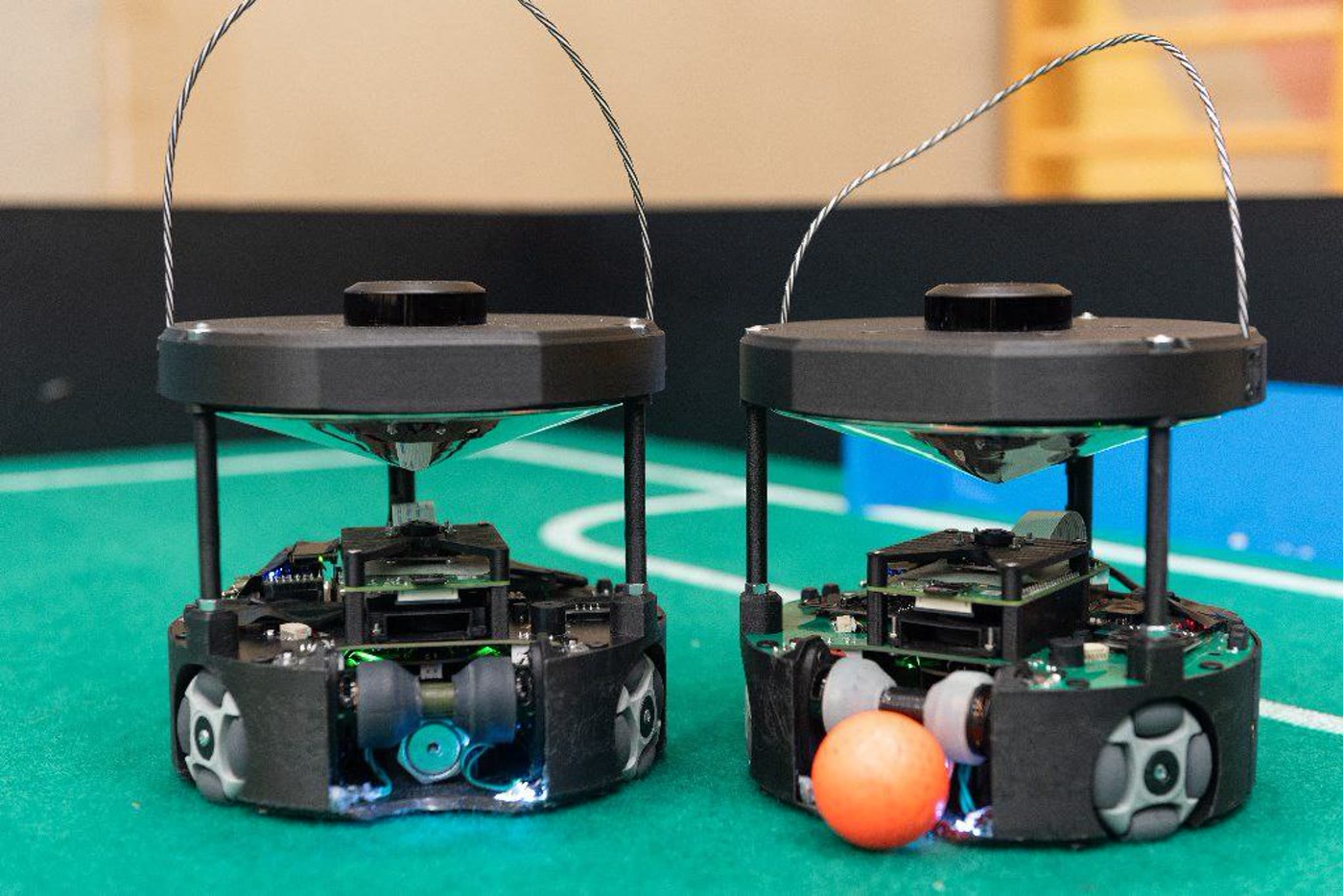
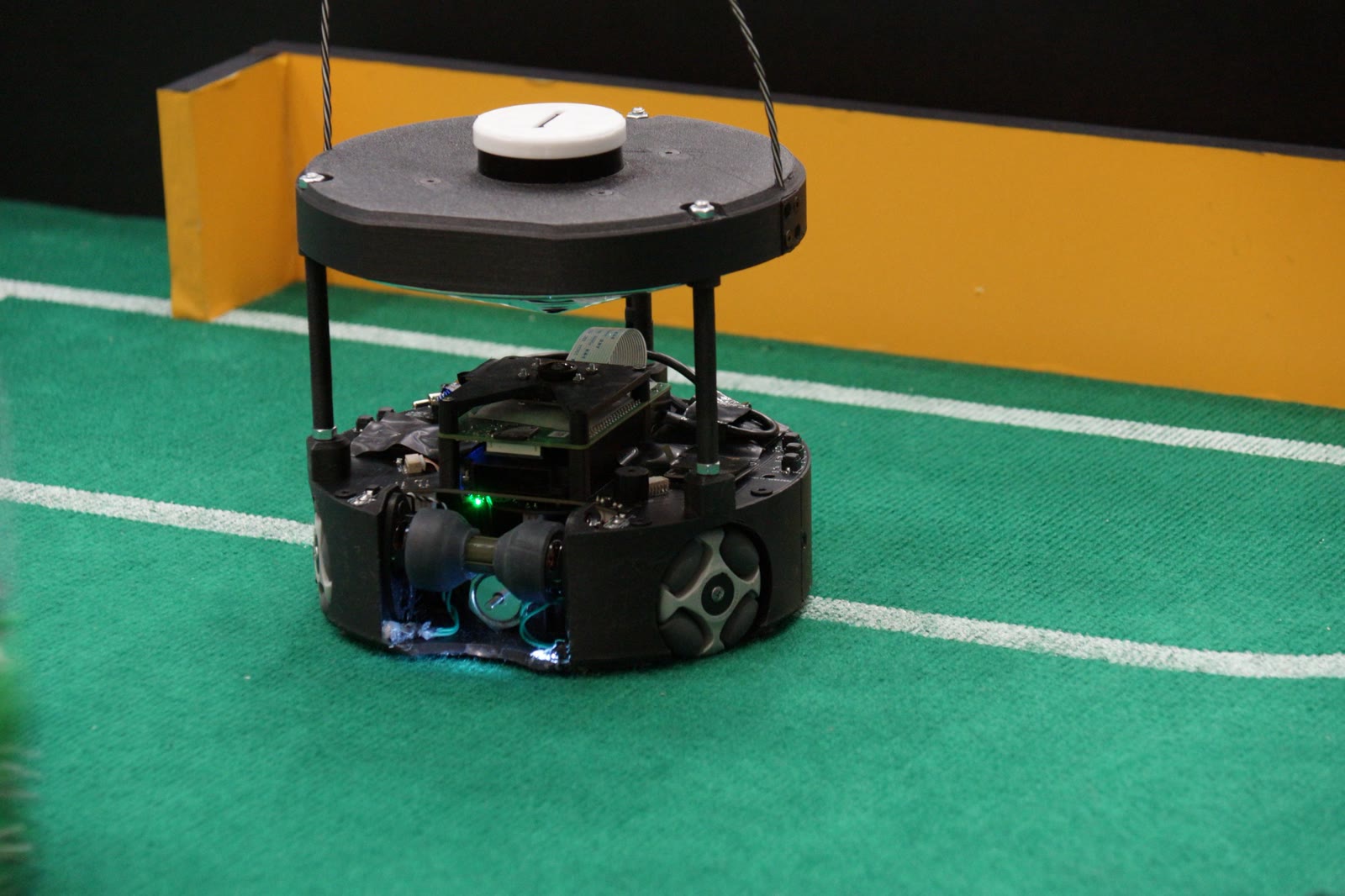
The photos, videos and specs on this page come from the team’s current robot (2026), which is closely related to the 2025 one I worked on.
What’s inside the robot
What follows combines my own work on localization and strategy with the team’s current design.
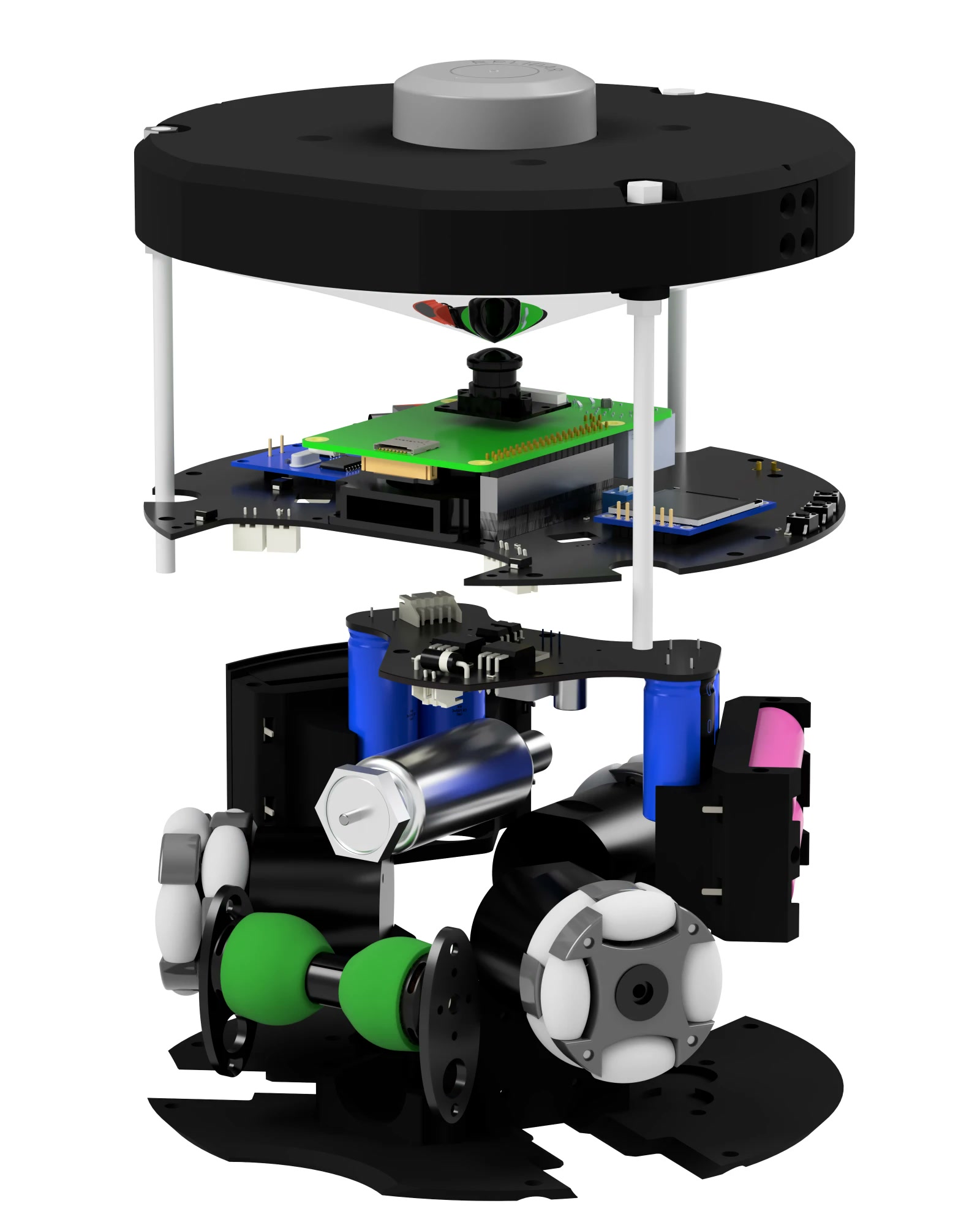
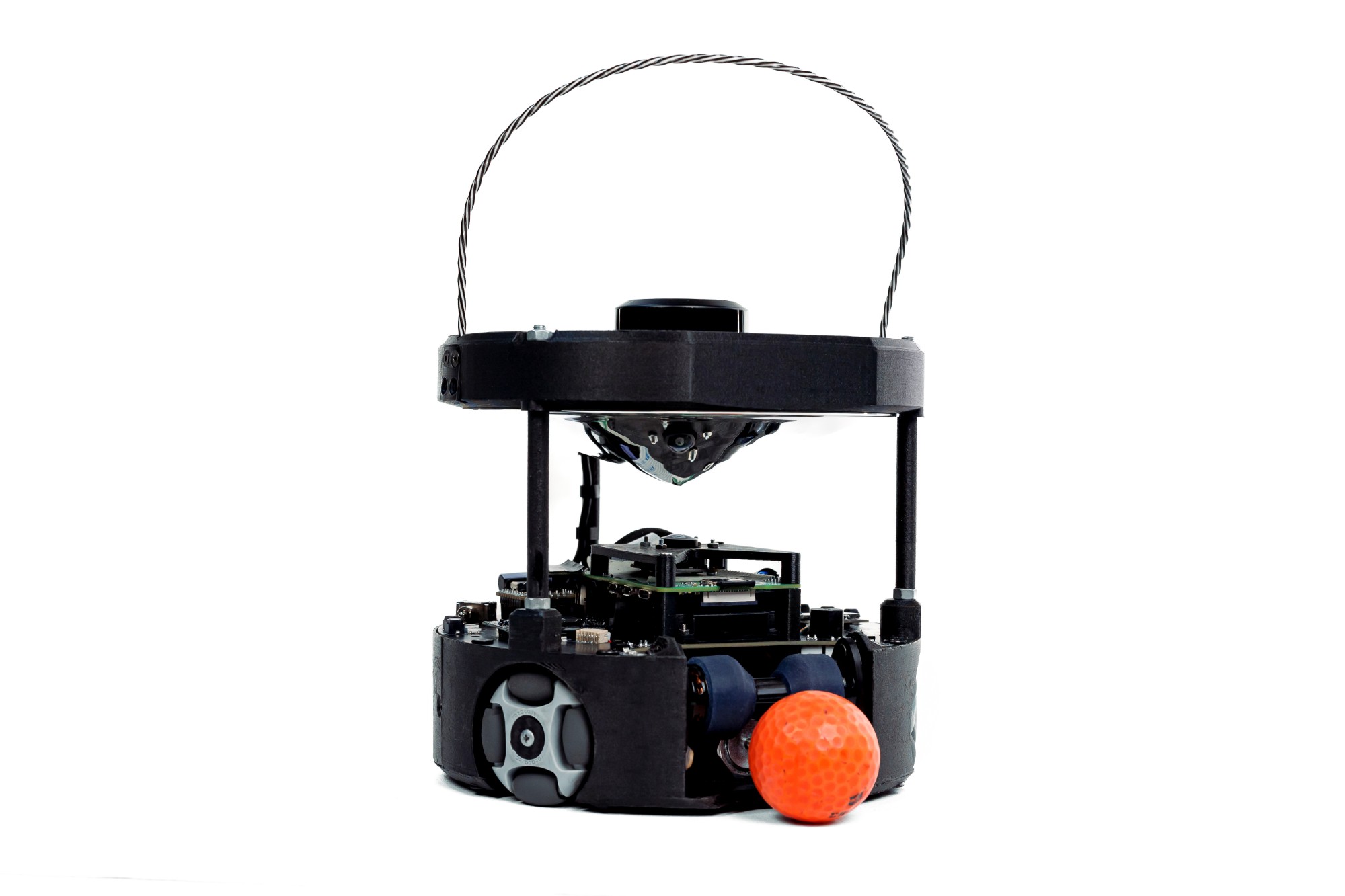
Localization from a LiDAR in C++. An RPLidar delivers 5,000 samples per second. I wrote a custom version of the Minimum Bounding Rectangle algorithm to find the field walls in the point cloud, which gives the robot’s exact position; the clusters left inside the field are other robots. A gyroscope tells which side of the field the robot is facing.
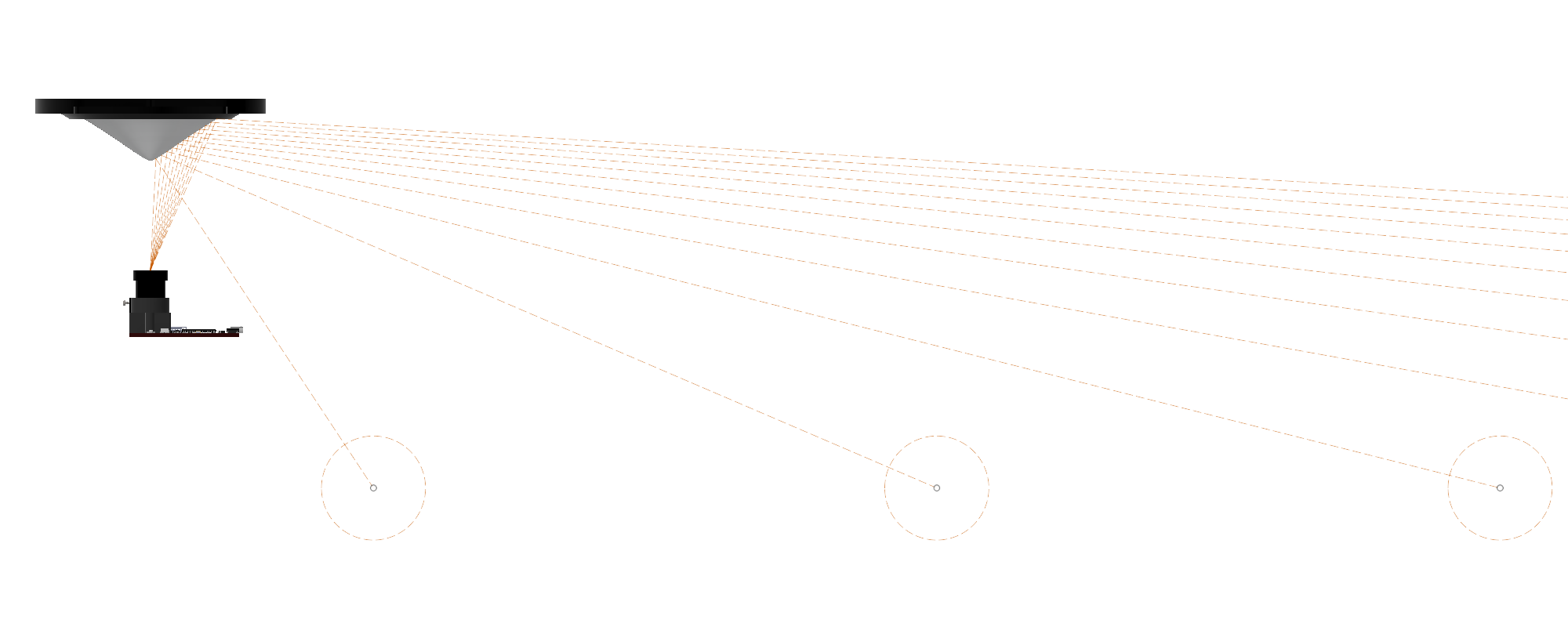
Vision. A camera with a 220° lens looks up into a custom mirror that was calculated, 3D-printed, sanded and chrome-plated, so the whole field fits into one frame. It runs at 50 fps on the Raspberry Pi with no neural networks: a colour threshold finds the ball, a minimum enclosing circle fits it, and an atan2 gives its angle and distance.
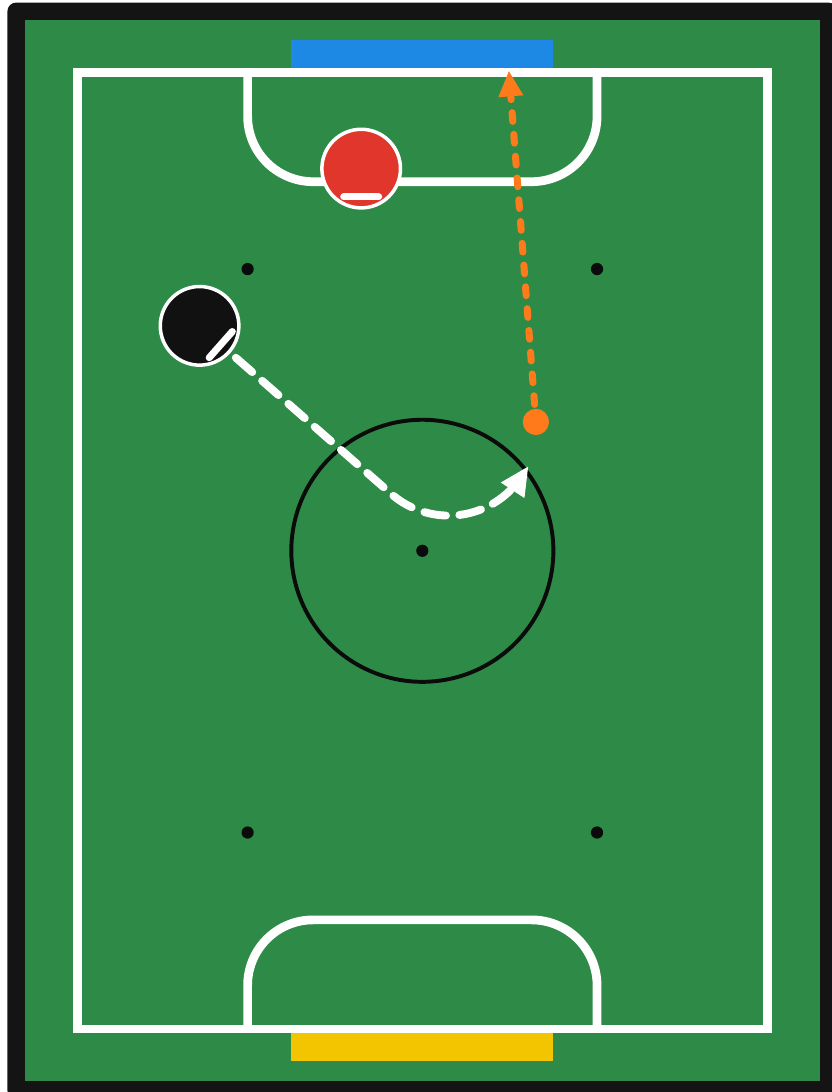
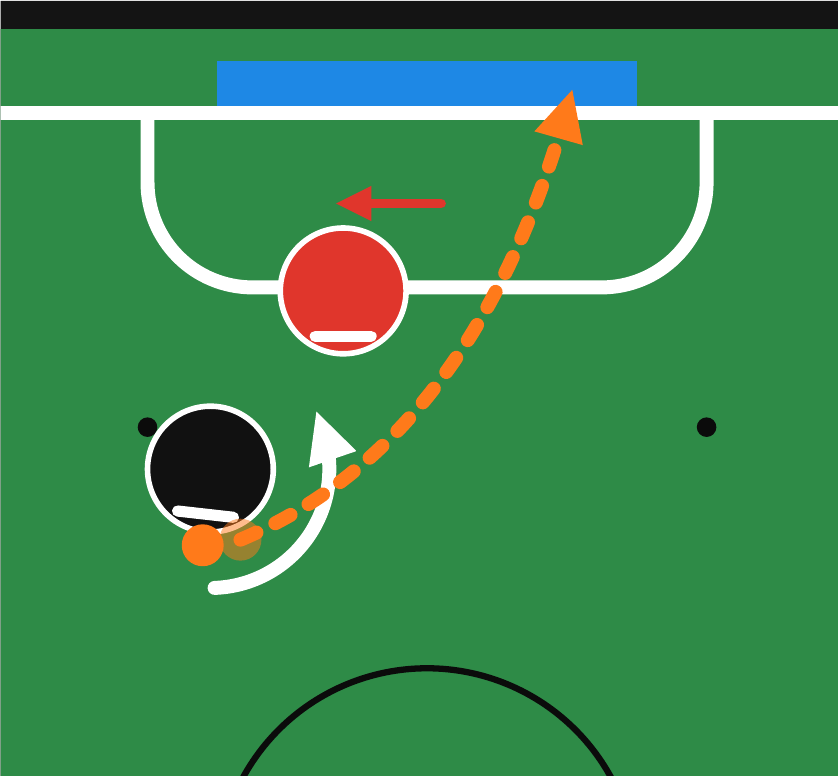
Path planning. I wrote a simulator that tests strategy without the robot, and implemented Artificial Potential Fields for obstacle avoidance, plus Dubins paths so the striker reaches the ball already facing the goal. A spin shot turns the robot 115° through the dribbler and curves the ball behind the keeper.
Drive. Three omnidirectional wheels at 120° let the robot move in any direction while turning, at up to 2 m/s. Brushless motors with 16-bit encoders talk over CAN, and an MPU-6050 gyroscope holds the heading.
Dribbler and kicker. The dribbler rollers are cast in our own 3D-printed moulds and sit on a floating mount with two degrees of freedom; a light gate tells whether the robot has the ball. The kicker is a solenoid charged to 48 V, and the pulse length sets the power from a soft pass to a full shot at up to 5 m/s.
Electronics. A Raspberry Pi 4 runs vision, positioning and strategy, while an ATmega328 handles the drive, dribbler and kicker over UART. The whole robot runs on four 18650 cells.
Results
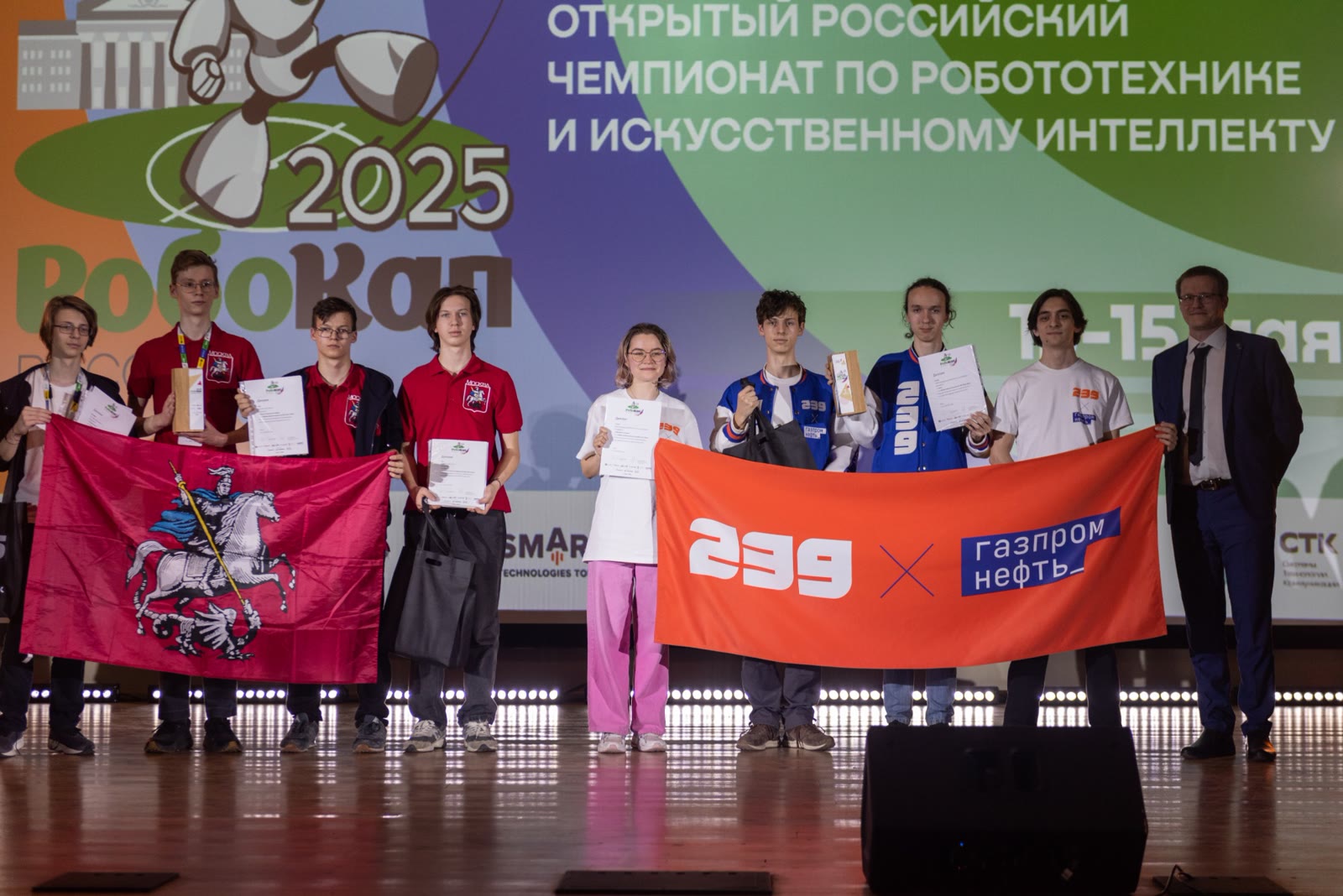
- RoboCup Russia Open 2025 — silver medal, Soccer Open League (national final)